Rather than asking where one identity ends and another begins, Ni de Aquí embraces the space in between revealing that the histories, traditions, and people on both sides of the border have always been more interconnected than they appear.


Ni de Aqui (Neither from Here) explores the duality of the Mexican-American identity, existing between two worlds, yet fully belonging to both. Merging elements of Mexican heritage and Americana influence to reflect the in-between space that shapes us.
Dissecting the Symbolism:
- The contemporary guayabera reimagines a traditional silhouette through a youthful lens. Cropped proportions, exaggerated sleeves, and a relaxed fit modernize the garment while honoring its cultural roots. Rather than recreating tradition, the design reflects how heritage evolves across generations, allowing cultural identity to exist in the present rather than the past.
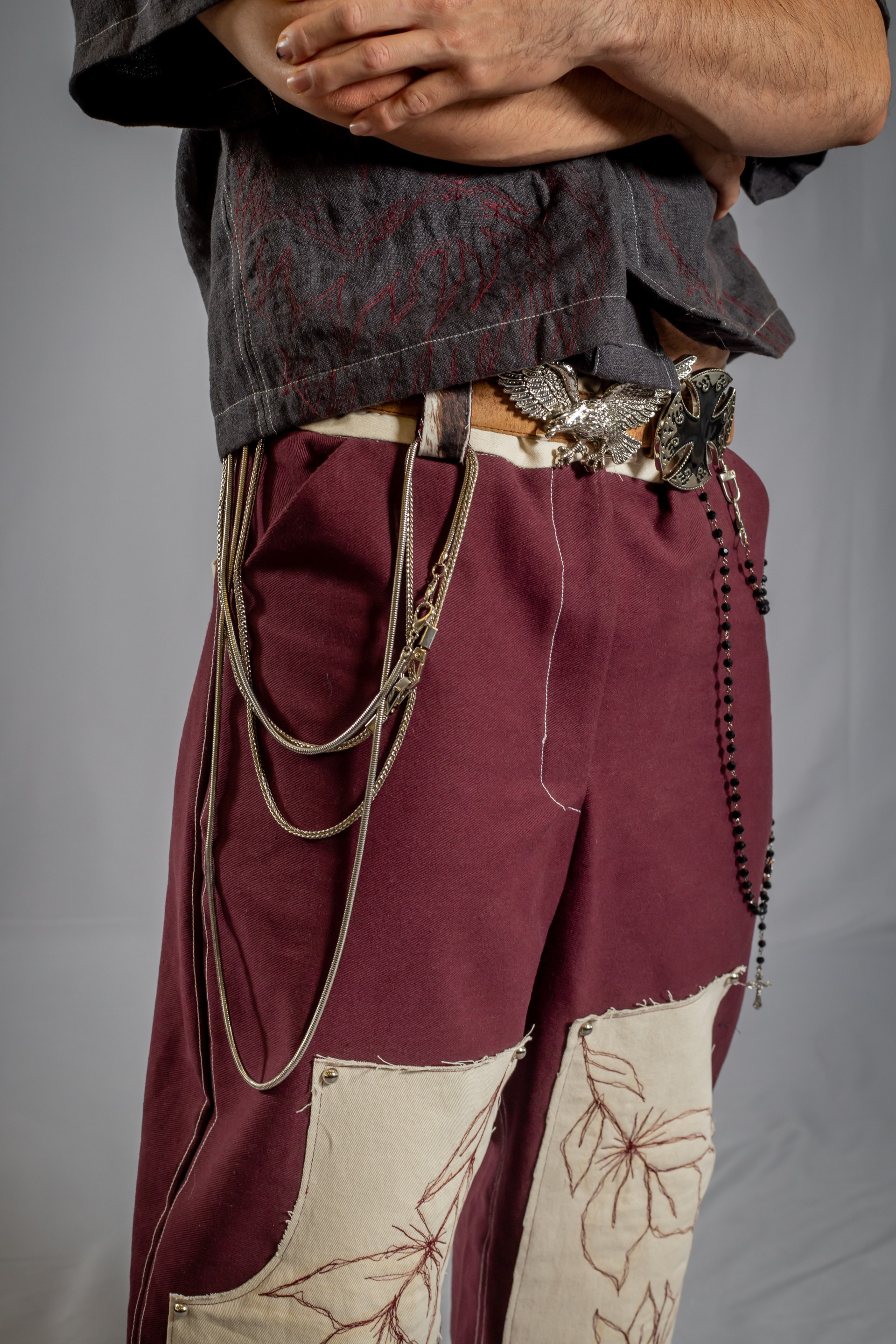
- The Western design elements reference classic Americana through cowhide accents, a pointed yoke, and metal hardware. Paired with the guayabera-inspired silhouette, these details challenge the perceived divide between Mexican and American identities while paying homage to the vaqueros who laid the foundation for what became the American cowboy. The garment emphasizes that these histories are not separate, but deeply interconnected.
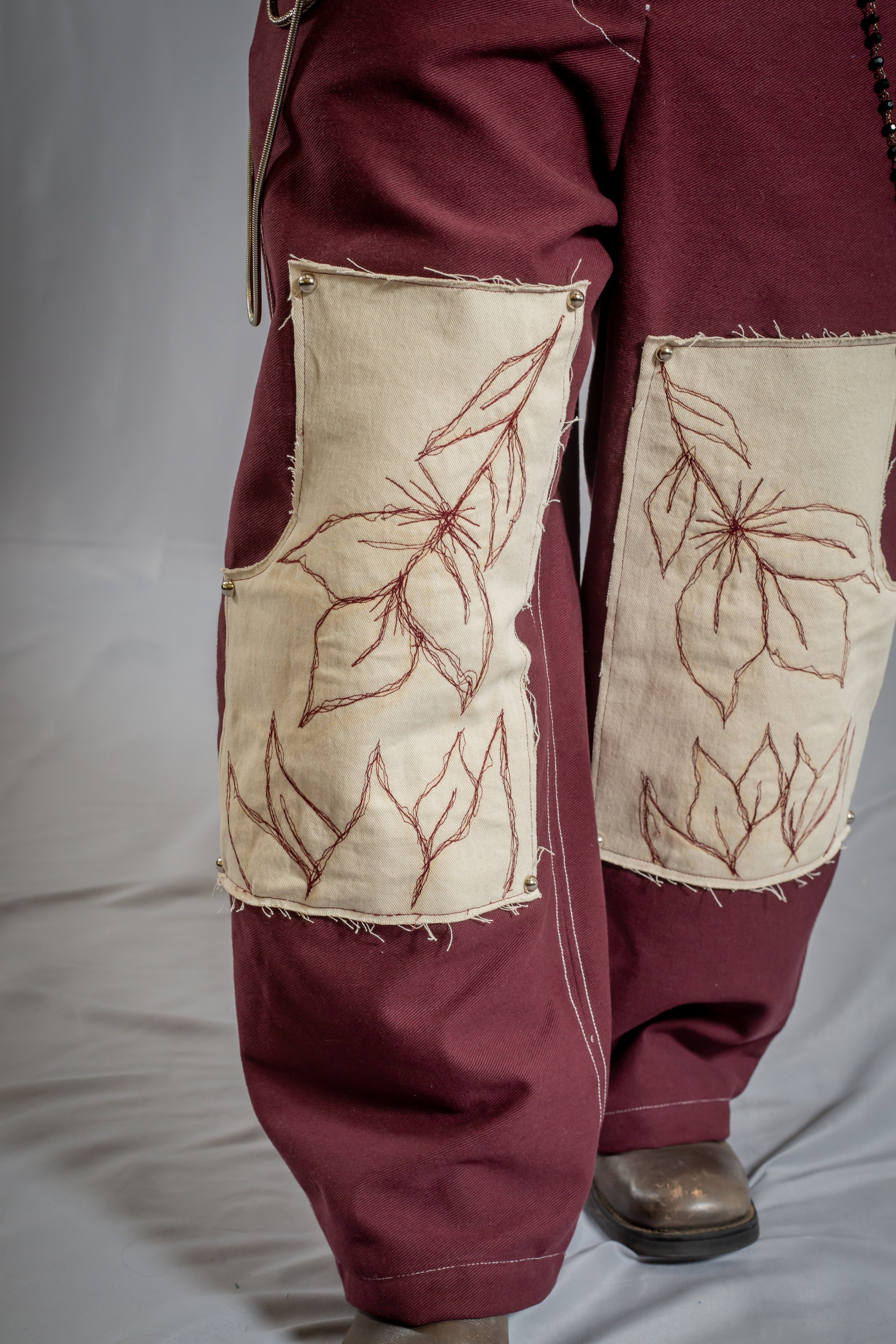
- The free-motion embroidery transforms national symbols into personal narratives. The golden eagle (national bird) and cactus stitched across the front bodice panels represent strength, resilience, and cultural inheritance, while the dahlia (national flower) embroidered onto the knee panels symbolizes dignity and perseverance. Rather than functioning as decorative motifs, each embroidered element reflects an identity that is carried, lived, and passed through generations.
- The handmade rosary chain serves as a symbol of faith, memory, and cultural inheritance. Repositioned from its traditional form into a wearable design element, it represents the values, traditions, and stories we carry with us. Rather than acting solely as a religious reference, it reinforces the collection's exploration of identity as something inherited, deeply personal, and continually reinterpreted.
The garment challenges the notion that identity must exist within fixed borders, illustrating instead that culture is continually shaped through movement, exchange, and generations of shared history.
Modeled by Nathaniel Mojica.